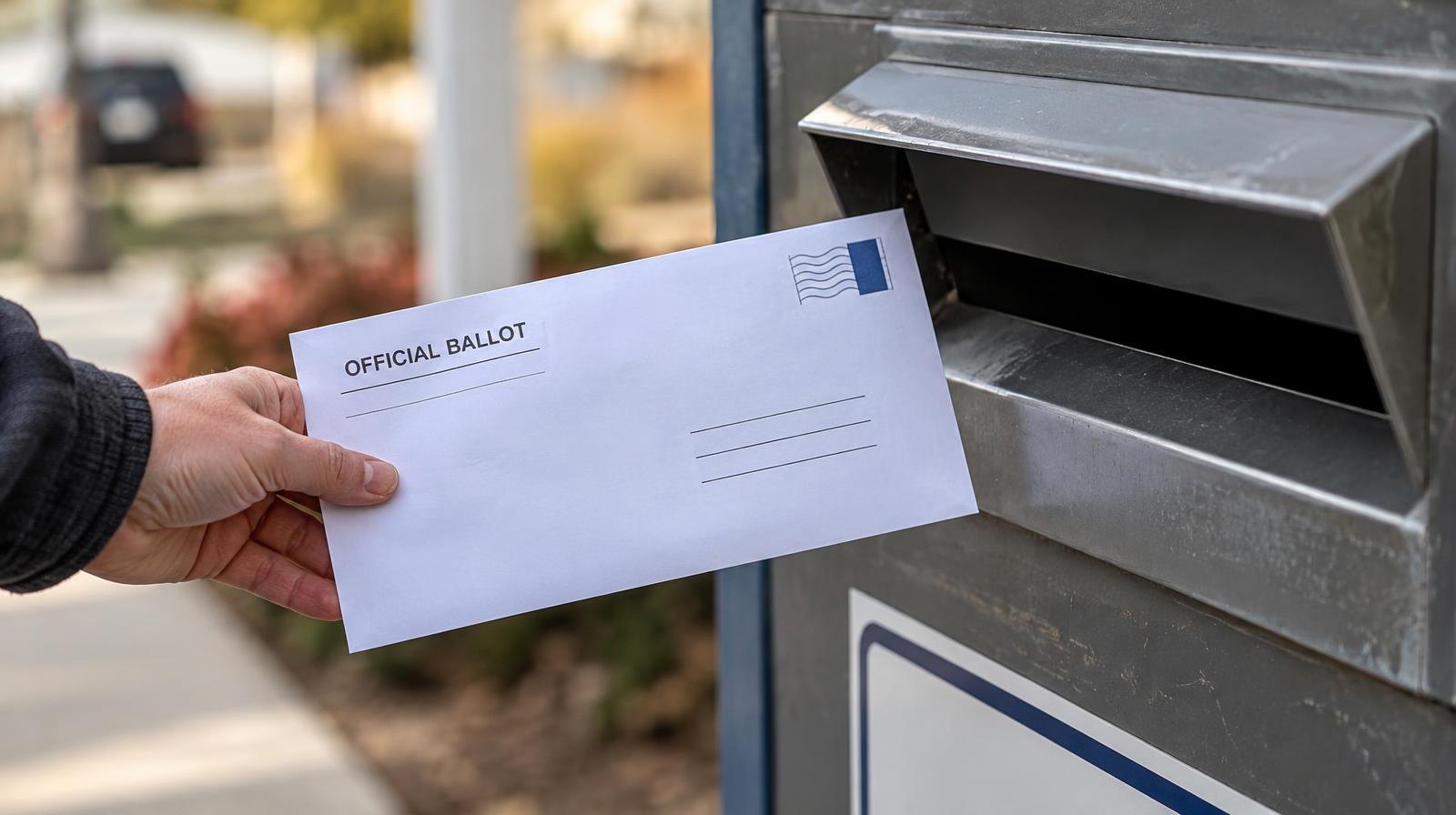
Riverside County told the U.S. Department of Justice it could not segregate 1,355 mail ballots the agency demanded be set aside one week before the Nov. 3 election.
The county's refusal, backed by court rulings at every level of the federal judiciary, means the DOJ's pre-election push to pull those ballots from the count stalled before Election Day. The county still has roughly 496,000 mail and conditional-registration ballots left to process, according to the Registrar of Voters' office.
How it played out
First Assistant U.S. Attorney Bill Essayli, a former Republican assemblymember from Corona, sent a letter to Riverside County Registrar of Voters Art Tinoco on Monday, Oct. 26, according to the Press-Enterprise. The letter identified 1,355 ballots from people the DOJ called "likely aliens," part of roughly 20,000 statewide the agency alleged were cast by noncitizens.
The letter gave Tinoco 48 hours to work with the DOJ and the Department of Homeland Security to verify citizenship. It warned of legal consequences if the office did not comply.
Two days later, U.S. District Judge David Carter rejected the DOJ's emergency request. Carter wrote that the demand would "wreak havoc and disrupt the election that is already underway, create a chilling effect on election workers and voters alike, and discount the votes of United States citizens," KESQ reported.
Riverside County responded through its Office of County Counsel, citing both the court order and what it called the logistical impossibility of pulling specific ballots from the processing stream. The letter to Essayli stated: "In light of the Court's order issued on October 28, 2026, and the logistical impossibility, the ROV is unable to segregate the 1,355 ballots of named individuals as requested," according to KESQ.
Appeals failed at every level
The DOJ appealed to the 9th Circuit Court of Appeals. A three-judge panel rejected the request in a 2-1 ruling on Friday, Oct. 30, with Judges Mark Bennett and Gabriel Sanchez writing that the DOJ failed to show an injunction was warranted, CBS News reported.
On Monday, Nov. 2, the U.S. Supreme Court denied the DOJ's emergency request to require California to set aside the ballots, NPR reported. Hours later, the full 9th Circuit vacated a separate three-judge panel ruling that had briefly allowed the DOJ to threaten prosecution of election officials who did not comply with its directives, according to Fox News.
California Attorney General Rob Bonta said in a statement that the Supreme Court's decision "should put an end to the Administration's attempt to disrupt California's elections through emergency court orders," according to NPR.
Questions remain
Data scientists at UCLA's Voting Rights Project found that 42% of the names on the DOJ's statewide list do not appear on California's current voter roll, according to NPR. The analysis also found naturalized citizens on the list. Elections officials have said processed ballots are anonymized and cannot be matched back to individual voters.
Riverside County Registrar of Voters spokesperson Yaoska Machado told the Riverside Record that state observers from the California Secretary of State and California Department of Justice were present at vote centers on Election Day, but no federal agents appeared.
Carter noted election officials have until Dec. 3 to certify results, according to KESQ. The full 9th Circuit's review of the DOJ's broader case remains pending.